Clarys
When information becomes readable, informed decision-making becomes possible.

The longitudinal reading platform that organises existing data without modifying it.
Clarys reconstructs the clinical history over time.
Clarys at a glance
Guirlande and basket of consultation
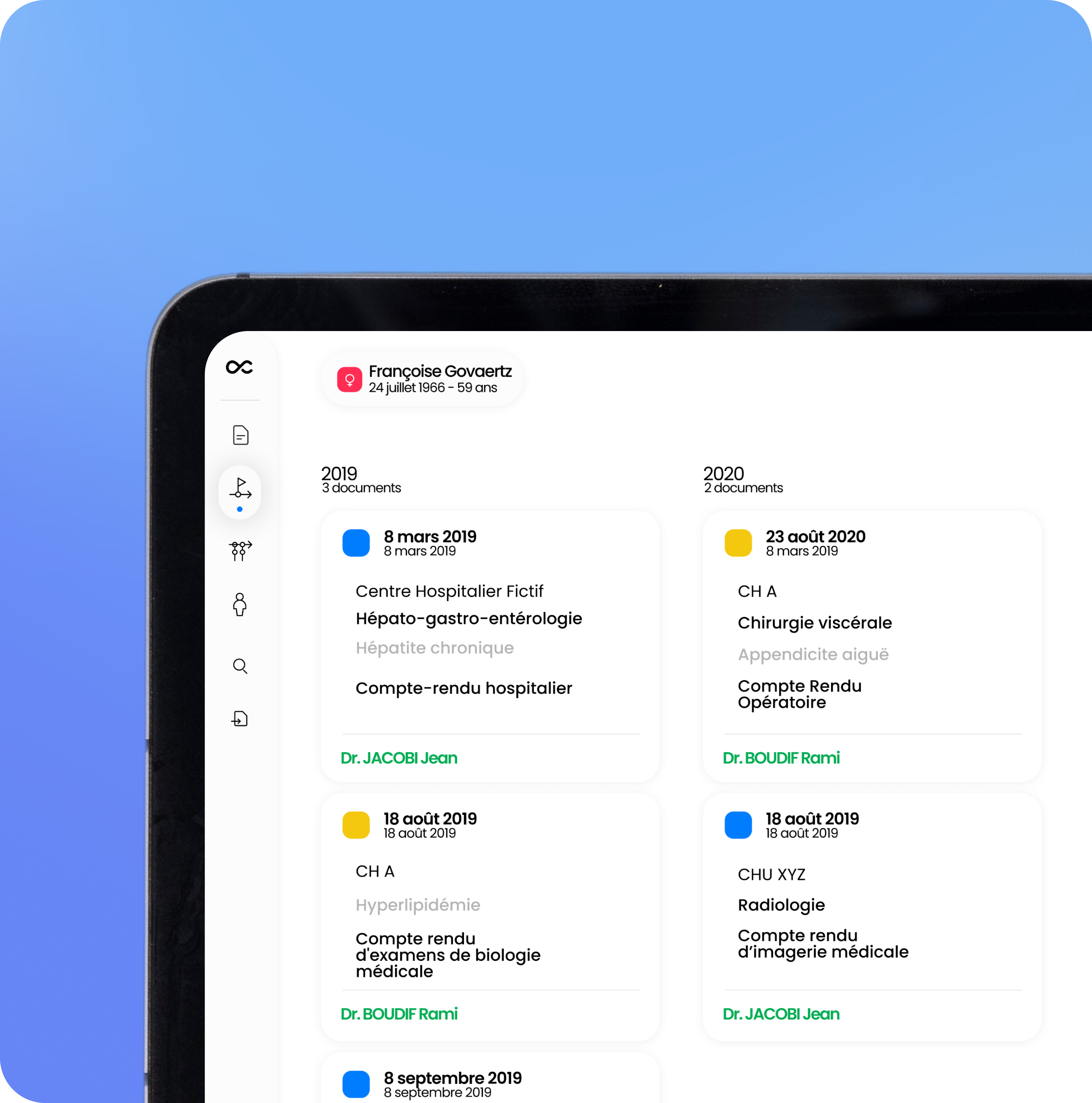
Provides a clear and structured visualization of the entire patient journey, without having to search through dozens of documents.

Intelligent context
Data is interconnected and contextualized, ensuring every piece of information makes sense immediately.
Reduced cognitive load
Less fatigue, less time wasted searching, and more focus on clinical analysis and patient relationships.
Course guirlande
Courseguirlande
CLARYS GUIRLANDE, providing a chronological and event-based overview of the patient's journey, featuring filters for quick access to relevant information.

Clinical information already exists

Documents
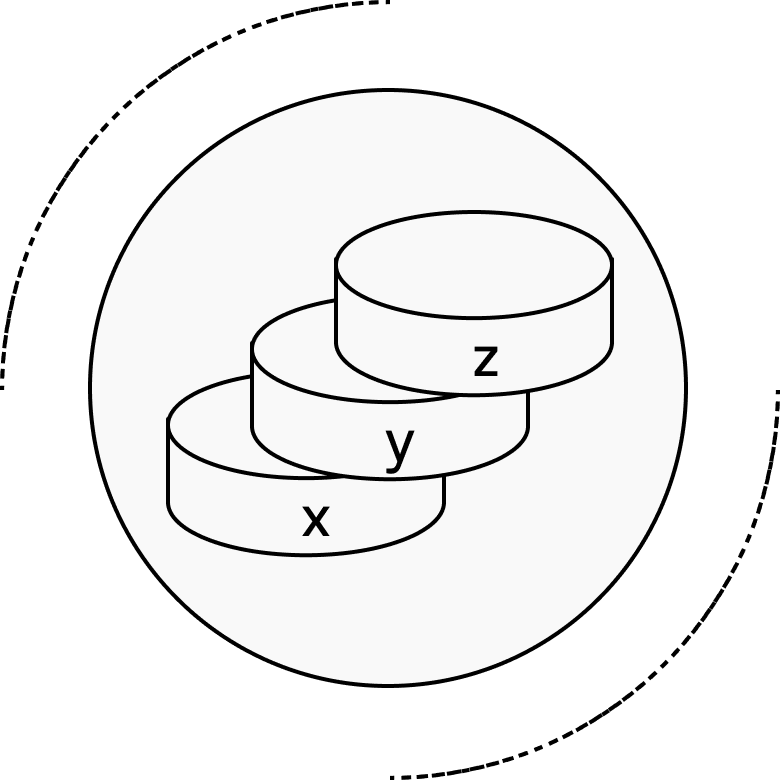
In healthcare systems, information already exists. Patient records, reports, exams, discharge letters, structured data... It is often complete, but scattered and difficult to read over time.
Medical Memory
ICFS Infor Cloverleaf Integration Suite. Get FHIR capabilities today.
GO AND FAST TO FHIR, proven methods and services. Your medical memory will be ready in a few weeks.


Clarys & Clarys Intelligence
CLARYS does not create data, nor does it modify it. It strictly respects source information. Its role is to recompose the clinical history over time...
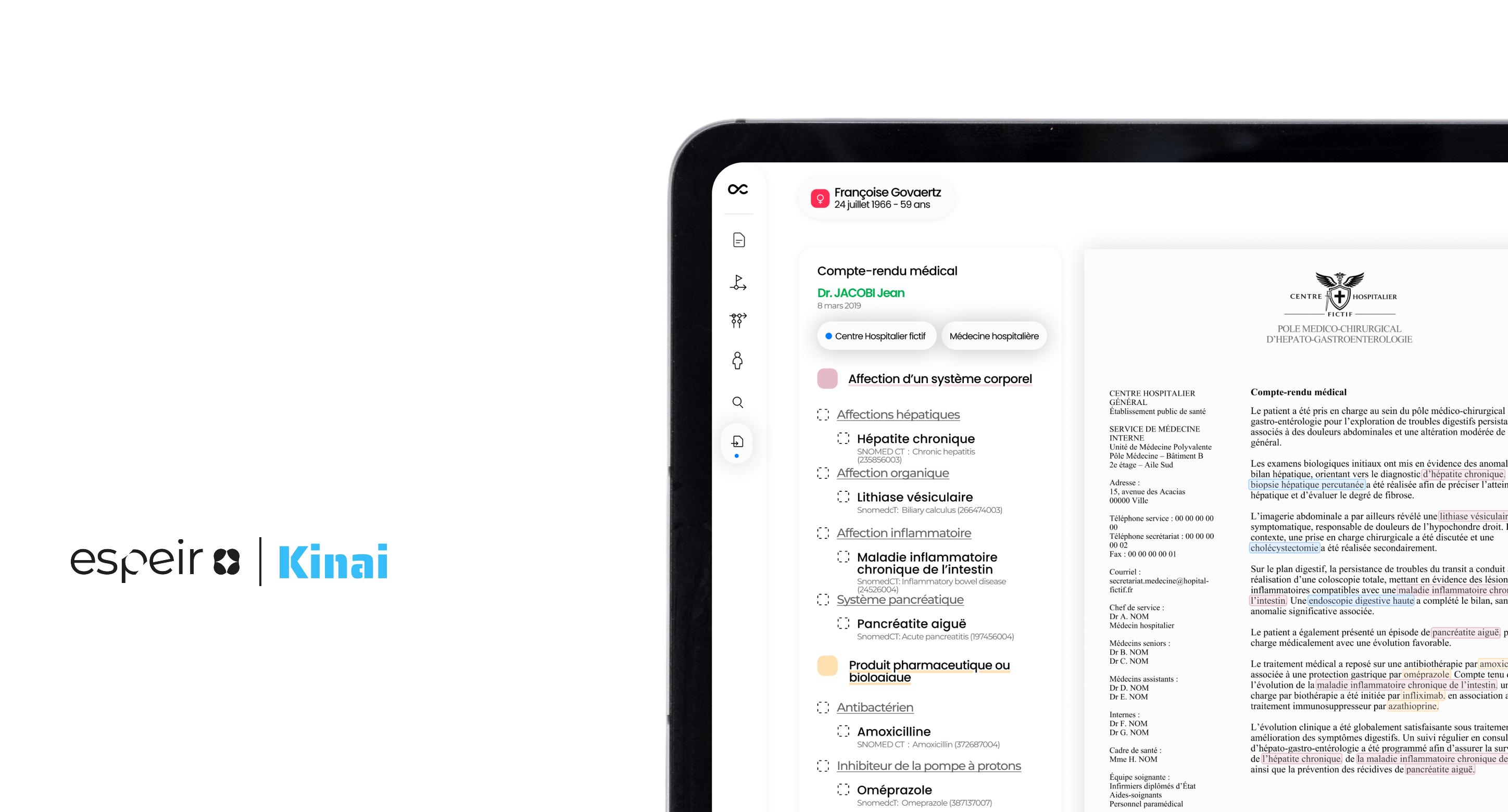
Because when it comes to health, understanding always comes before deciding
A transversal medical memory to durably modernize healthcare systems
By creating a transversal medical memory independent of business applications, ESPEIR supports healthcare facilities in the progressive, sovereign, and sustainable modernization of their information systems.
In this context, Clarys helps reduce the cognitive load of professionals and strengthen the continuity of care pathways.
BEFORE / AFTER
Clarys
What Clarys is not

Clarys does not replace the physician
CLARYS does not provide diagnoses, issues no alerts, and makes no clinical decisions.

Clarys does not create artificial content
Clarys does not use generative models or "black box" AI. It leverages only existing data and official reference terminologies.

Clarys does not disrupt your existing systems
CLARYS integrates seamlessly with existing applications and workflows, without modifying or altering data.

Clarys does not perform automated interpretation
CLARYS structures and organizes clinical information, but understanding and diagnosis remain entirely human and secure.
Clarys is not a EMR
Clarys positions itself as a layer of business intelligence that enhances your existing tools without ever seeking to replace them.
Our commitment is to ensure complete transparency regarding the origin of the data, ensuring a secure and humane clinical practice.
Your Questions?
Our Answers.
Legitimacy & Value
- Let's be honest: With CLARYS, haven't you mostly just built a better interface?
If it were only an interface, we wouldn't have this impact. CLARYS doesn't just improve the display: it recomposes the meaning of clinical information by making it readable over time and within context.
The improvement in the caregiver experience comes from the reduction of cognitive load, not just visual comfort.
cognition ≠ ergonomics.
- Your benefits are mostly organizational, not for caregivers... right?
Organizational benefits are a consequence, not the starting point. Our starting point is field priority.
The primary beneficiary is the caregiver:
- Less time searching,
- Less information fatigue,
- More clarity in complex situations.
When the caregiver experience improves, the organization follows naturally.
field priority.
- Who really benefits from your solution: the caregiver or the IT Department?
The direct beneficiary is the caregiver. The IT Department finds interest because the solution respects existing systems, data security, and sovereignty.
But if the field experience doesn't improve, the solution has no value — and that is our compass.
business-driven priority.
- Do you have quantified evidence of impact?
We do not claim artificial medico-economic indicators. Our impact is immediately observable in the field:
- Reduced search time,
- Better preparation for consultations and staff meetings,
- Decrease in perceived cognitive load.
These are precisely the daily irritants that degrade the caregiver experience today.
credibility without over-promising.
- Are CLARYS' benefits clinical or organizational?
The benefit is primarily clinical and cognitive: less time searching, better continuity, less information fatigue.
Organizational benefits are a consequence, not an initial goal.
Field priority
- What is the data workflow within CLARYS?
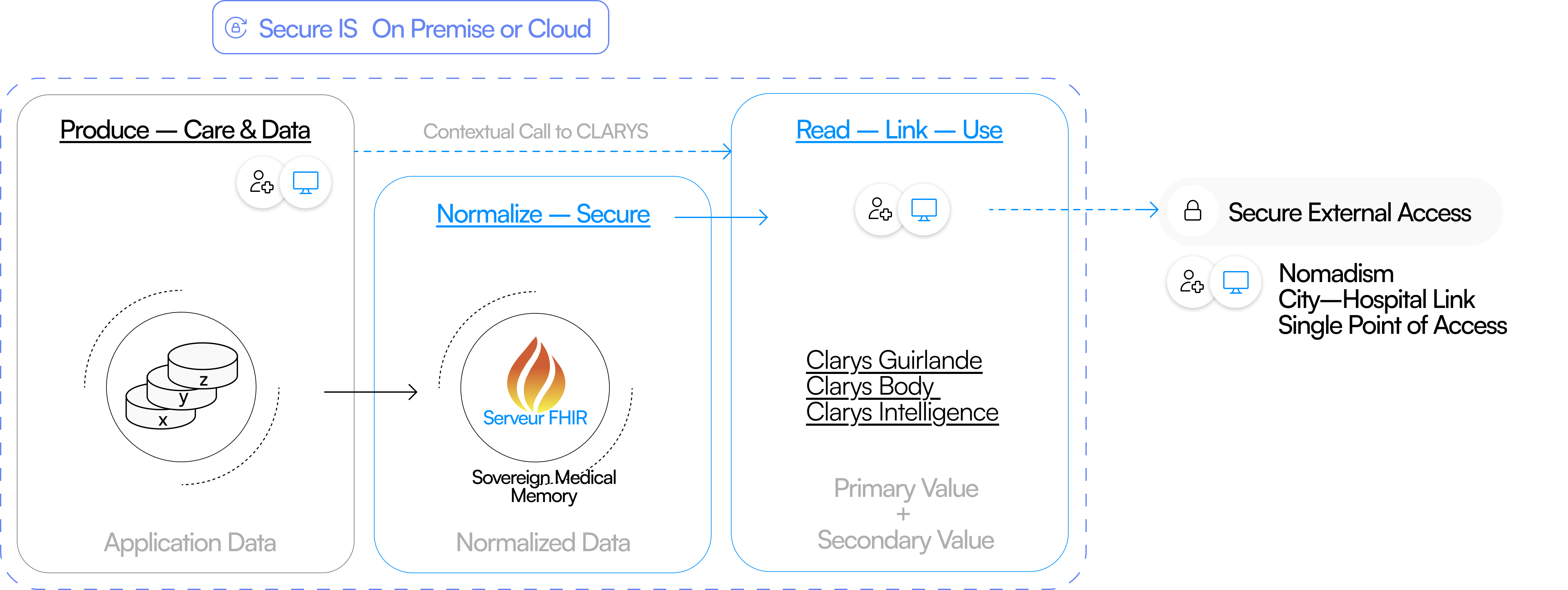
The CLARYS workflow follows a 3-key-step architecture:
1. Documents: In healthcare systems, information already exists. It is often complete, but scattered and difficult to read over time.
2. Medical Memory: We use Cloverleaf integration and proven methods to transform these flows into the FHIR standard.
3. Clarys & Clarys Intelligence: CLARYS does not create data; it recomposes it to provide a comprehensive and contextualized reading.
Because in healthcare, understanding always precedes deciding.
- What are the concrete changes brought by the solution?
Here is the transformation CLARYS brings to your daily routine:
- Data: Scattered → Connected
- Reading: Episodic → Longitudinal
- Clinical Sense: Dispersed → Restored
- Cognitive Load: High → Reduced
- Practices: Constrained → Preserved
- Interoperability: Technical → Semantic
- Primary Value: Hardly exploitable → Effortlessly accessible